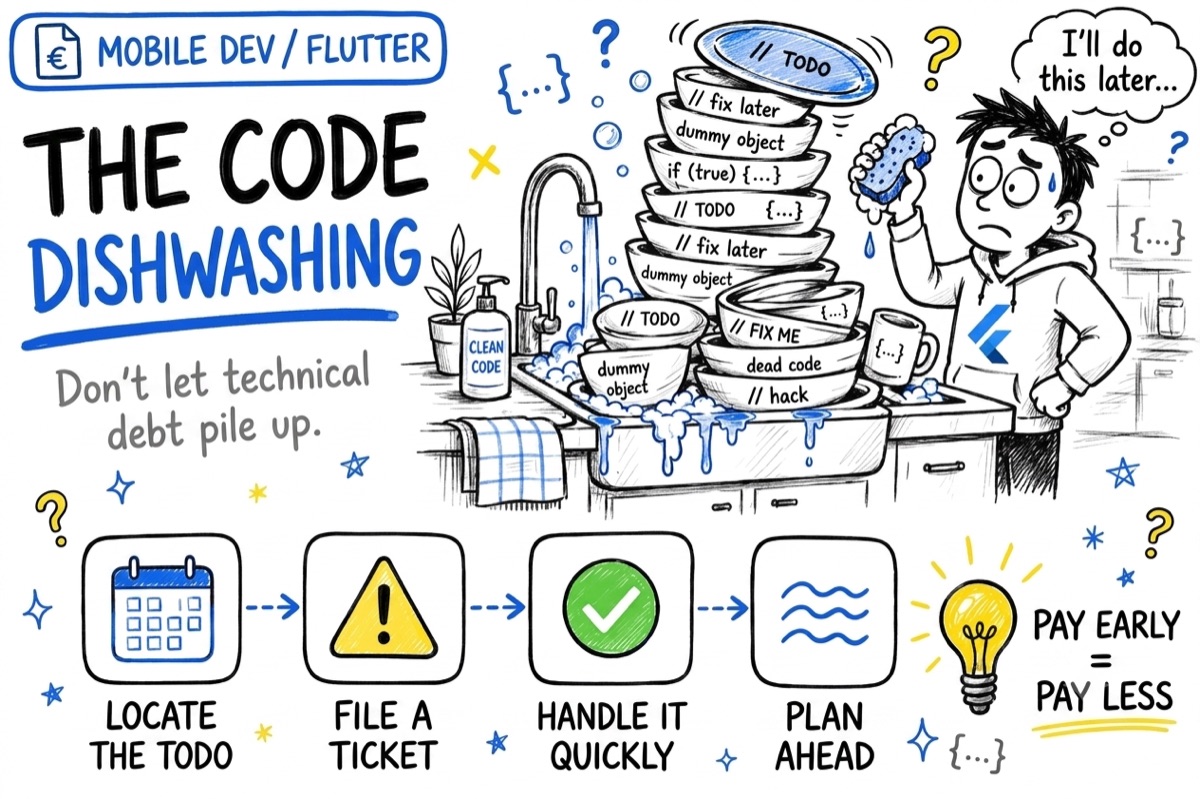
The code dishwashing — don't let your technical debt pile up
A "we'll handle this error later" TODO left for years, a dummy object ending up cached, and a very real bug. Technical debt earns compound interest.
An old comment found in a codebase:
// this dummy object. We must have a better way to handle errors in the future.
The "in the future" never came. But the object ended up in the cache.
The trap set in silence
Impossible to fetch a fresh object afterwards. The debt we thought harmless had turned into a very real bug.
The trap had been set for a long time, silently, waiting for the right context to blow up.
We knew how to handle that error properly. We just said "later". And "later" is the lie we tell ourselves before closing the file.
The real debt
It's not the code we don't know how to write. It's the code we choose not to write.
TODOs and Jira tickets pile up, like dishes. At best, they slow you down. At worst, something breaks.
It's the compound interest trap: the debt you ignore never stays at its initial amount. It grows on its own, silently, until the day the bill arrives.
Code gets repaid sooner than you think.